
“Men make their own history, but they do not make it as they please”
the mistakes of A revolução de 1930 from a Marxist perspective of revolution
DOI:
https://doi.org/10.5335/srph.v24i2.17822Keywords:
Boris Fausto, Bourgeois Revolution, Revolution of 1930Abstract
A revolução de 1930 is a landmark in the historiography about this period, bringing a critic to the interpretations that came of what Bóris Fausto calls as the theory of dualism in the dependent latin-american societies, and that unfolds in two variants that the author seeks to refute. In the making of his critics and in the way to counter what would it be in his eyes an inconsistent interpretation, Bóris Faust criticism arises from a watertight and intentionalist conception of bourgeois revolution, taking the bourgeoisie as a synonymous of industrialization, from an interpretation that considers the class movements in an anti-dialectical way, detaching the struggles between local powers and the development of productive forces of the dynamics of capitalism at local and global level, and that it's far from the totalizing conceptions of social change that are undertaken by the marxist analyses that he aims to refute.
Downloads
References
FAUSTO, Bóris. A revolução de 1930: história e historiografia. 16. ed. rev. e ampl. São Paulo: Companhia das Letras, 1997.
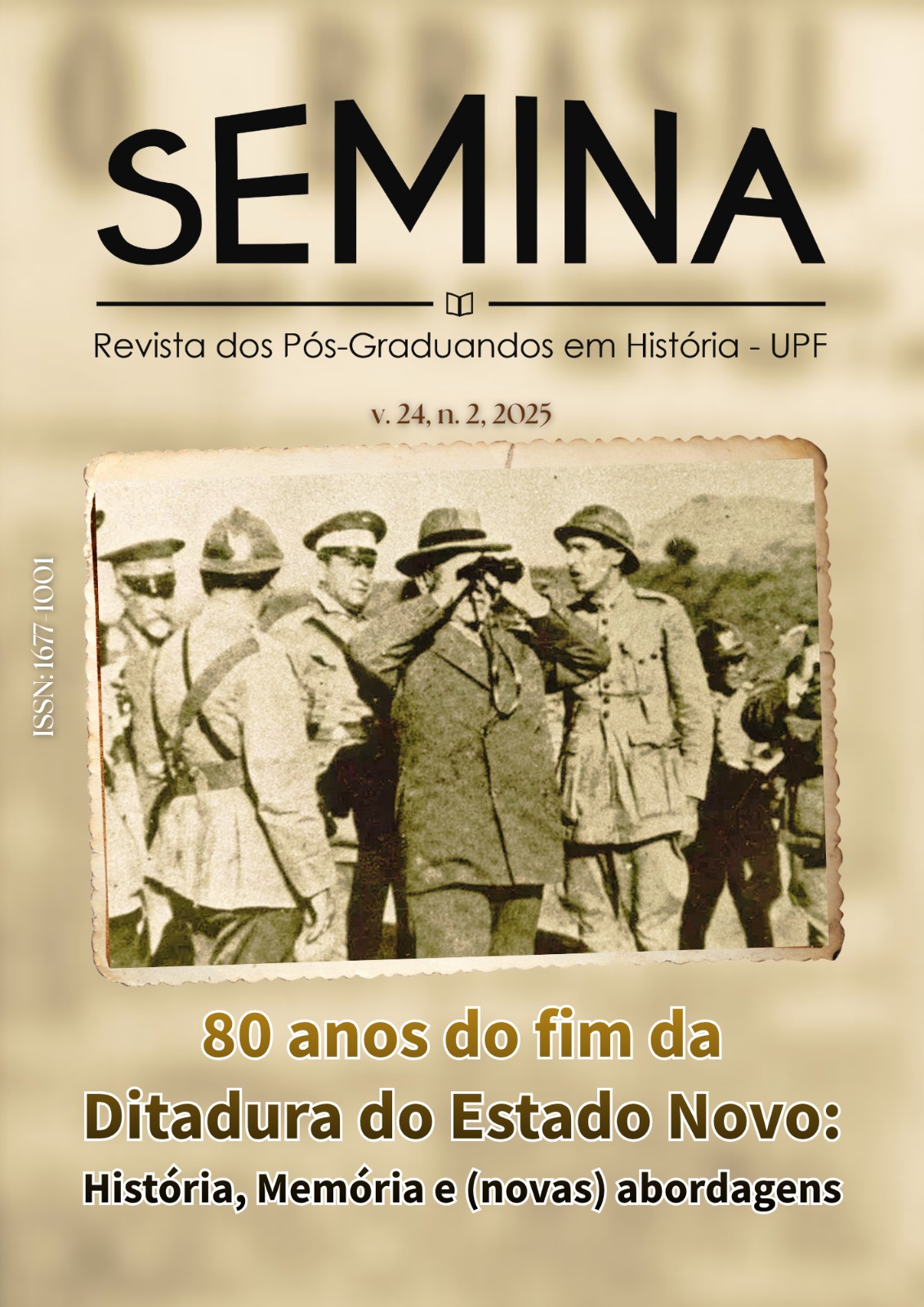
Downloads
Published
Issue
Section
License

This work is licensed under a Creative Commons Attribution-NonCommercial 4.0 International License.
Autores que publicam nesta revista concordam com os seguintes termos:
- Autores mantêm os direitos autorais e concedem à revista o direito de primeira publicação, com o trabalho simultaneamente licenciado sob a Licença Creative Commons Atribuição 4.0 Internacional – CC-BY que permitindo o compartilhamento do trabalho com reconhecimento da autoria do trabalho e publicação inicial nesta revista.
- Autores têm autorização para assumir contratos adicionais separadamente, para distribuição não-exclusiva da versão do trabalho publicada nesta revista (ex.: publicar em repositório institucional ou como capítulo de livro), com reconhecimento de autoria e publicação inicial nesta revista.
- Autores têm permissão e são estimulados a publicar e distribuir seu trabalho online (ex.: em repositórios institucionais ou na sua página pessoal), a qualquer ponto antes ou durante o processo editorial, já que isso pode gerar alterações produtivas, bem como aumentar o impacto e a citação do trabalho publicado, de acordo ainda com a democratização científica prevista pela Ciência Aberta.